Dear Students
As promissed, I am including the links to some scenes of Elia Kazan version of A Streetcar Named Desire. I thought I might be able to send you the whole film but someone must be cleaning youtube.
But please watch first this documentary on Tennessee Williams
Wounded Genius Part I
Part II
Part III
Part IV
Part V
Time now for Streetcar; here go aome key scenes:
You must be Stanley
What's a rhynestone?
Hey Stella
Blanche and Mitch- I once loved someone...this is the famous scene where Blanche talks about her dead young huaband. Notice the differences between the play and the film, with regard to Allan Grey's homosexuality.
A birthday rememberance
The rape scene
The kindness of strangers (last scne)
terça-feira, 27 de outubro de 2009

segunda-feira, 19 de outubro de 2009
Long Day's Journey into Night
Dear students
You may find it interesting to watch excerpts from the famous Sidney Lumet's film adaptation of today's play.
For copywright reasons the play is not avalialable in its entirety, but you can watch bits from the IV and last act.
Act IV
Jamie's confession, Act IV
Here also is the final scene of the play.
You may find it interesting to watch excerpts from the famous Sidney Lumet's film adaptation of today's play.
For copywright reasons the play is not avalialable in its entirety, but you can watch bits from the IV and last act.
Act IV
Jamie's confession, Act IV
Here also is the final scene of the play.
domingo, 11 de outubro de 2009
Eugene O'Neill, o Little Theatre Movement e o modernismo dramático Americano
Dear students
I hope you enjoyed reading the play Triffles, by Susan Glaspel. It was made recently into a film and you can see here the trailer and a short scene. You may also find interesting a student report on the play which you can read here.
Susan Glaspel was involved with the Provincetown Players, the pioneer company that introduced modern theatre in the United States.
The playwright most responsible for the new, moderm, American Drama was Eugene O'Neill, who staged his first play in an abandoned warf used by the Provincetown players, in the small fishibg village of cape Cod, where many young intellectuals and artists of the period spent their summers.
On Thursday, we will talk about O' Neill, and watch a documentary on his life and work, but as preparation, watch these taped interviews with some actors who have acted in recent production of this plays. You will hear Christopher Plummer talk about the character of James Tyrone, from A Long Day's Journey into Night, which we will study next session, and Al Pacino, reading from the play The Iceman Cometh.
You may also watch a famous old film adaptation of O'Neiil's Anna Cristie, with Greta Garbo in her first speaking role.
Part I
Part II
Part III
Part IV
Part V
Part VI
Part VII
Part VIII
I hope you enjoyed reading the play Triffles, by Susan Glaspel. It was made recently into a film and you can see here the trailer and a short scene. You may also find interesting a student report on the play which you can read here.
Susan Glaspel was involved with the Provincetown Players, the pioneer company that introduced modern theatre in the United States.
The playwright most responsible for the new, moderm, American Drama was Eugene O'Neill, who staged his first play in an abandoned warf used by the Provincetown players, in the small fishibg village of cape Cod, where many young intellectuals and artists of the period spent their summers.
On Thursday, we will talk about O' Neill, and watch a documentary on his life and work, but as preparation, watch these taped interviews with some actors who have acted in recent production of this plays. You will hear Christopher Plummer talk about the character of James Tyrone, from A Long Day's Journey into Night, which we will study next session, and Al Pacino, reading from the play The Iceman Cometh.
You may also watch a famous old film adaptation of O'Neiil's Anna Cristie, with Greta Garbo in her first speaking role.
Part I
Part II
Part III
Part IV
Part V
Part VI
Part VII
Part VIII
domingo, 4 de outubro de 2009
A actividade teatral americana até ao limiar do século XX
Dear Students
To satisfy everybody, this message is issued in English with a bit of Portuguese thrown in.
First I am sending you the direct link to the Secção de Estudos Ingleses e Norte Americanos, which you should save, as it publishes regularly information that might interest you. If you open the link to cursos, on your right, and scroll the page down, you will find a list on recent dissertations that may give you an idea of what has been done in our Mestrado, namely in the area of American Studies.
I am also enclosing, as promissed, the link to the syllabus of this seminar, so that you may open the three links included, namely the exhibition, the glossary and the chronology.
As to the three plays you will be discussing next Thursday, you might like to know that the 1778 comedy The Contrast has been recently revived, in an updated version. Open the link to read a review. You may also read on Royall Tyler here. You may also see here its original bookcover.
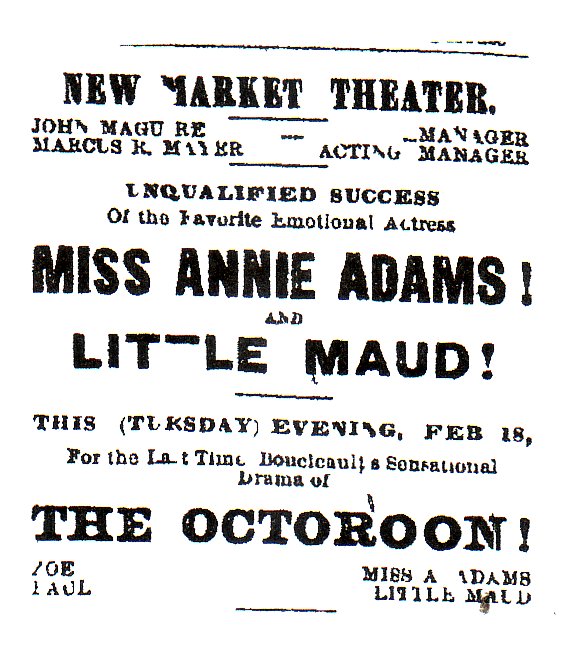
The Octoroon, the second play to be discussed is by Dion Boucicault and was first staged in 1859 (the year before the start of the Civil War). Here you may see a poster advertising its performance.
It has also been staged recently as you may read.
Boucicault addressed the anti-slavery message of the play though a narrative of passing, as we will no doubt discuss.
Margaret Fleming, by James A, Herne, from 1890, is often considered the first modern American play. It bridges the tradition of American melodrama and the new realist tendencies introduced, among others, by Ibsen. Read here about recent production of the play.
You may also read about James A. Herne, often called "the American Ibsen".
Next Thusday these plays will be discussed in the second half of the session. Each one of you will have about ten minutes to let the rest of the group know about the plays they have not read.
You should be prepared to give a brief idea if the plot, but especially to contextualise the play in its time and context, as well as your personal reading and impressions. You may use notes. Both English and Portuguese are accepted as working languages or a mixture of the two.
Good readings
PS. Richard Zimler will be speaking in room 44, edifício B1 (the low building on your left as you enter the faculty (on the first floor) and not where I first told you. That will be at 3, on Wednesday.
To satisfy everybody, this message is issued in English with a bit of Portuguese thrown in.
First I am sending you the direct link to the Secção de Estudos Ingleses e Norte Americanos, which you should save, as it publishes regularly information that might interest you. If you open the link to cursos, on your right, and scroll the page down, you will find a list on recent dissertations that may give you an idea of what has been done in our Mestrado, namely in the area of American Studies.
I am also enclosing, as promissed, the link to the syllabus of this seminar, so that you may open the three links included, namely the exhibition, the glossary and the chronology.
As to the three plays you will be discussing next Thursday, you might like to know that the 1778 comedy The Contrast has been recently revived, in an updated version. Open the link to read a review. You may also read on Royall Tyler here. You may also see here its original bookcover.

The Octoroon, the second play to be discussed is by Dion Boucicault and was first staged in 1859 (the year before the start of the Civil War). Here you may see a poster advertising its performance.

It has also been staged recently as you may read.
Boucicault addressed the anti-slavery message of the play though a narrative of passing, as we will no doubt discuss.
Margaret Fleming, by James A, Herne, from 1890, is often considered the first modern American play. It bridges the tradition of American melodrama and the new realist tendencies introduced, among others, by Ibsen. Read here about recent production of the play.
You may also read about James A. Herne, often called "the American Ibsen".
Next Thusday these plays will be discussed in the second half of the session. Each one of you will have about ten minutes to let the rest of the group know about the plays they have not read.
You should be prepared to give a brief idea if the plot, but especially to contextualise the play in its time and context, as well as your personal reading and impressions. You may use notes. Both English and Portuguese are accepted as working languages or a mixture of the two.
Good readings
PS. Richard Zimler will be speaking in room 44, edifício B1 (the low building on your left as you enter the faculty (on the first floor) and not where I first told you. That will be at 3, on Wednesday.
Subscrever:
Mensagens (Atom)